
You take melatonin, you fall asleep okay, and then you’re wide awake at 3am with your mind running through everything you didn’t finish. Or you’ve been taking it so long you’re not even sure it’s doing anything anymore.
For a lot of people in Nassau County, NY, melatonin has become a nightly habit that stopped delivering results — but quitting feels risky because at least it’s something. CBD keeps coming up as an alternative, and you want to know if there’s actually something to it or if it’s just another wellness trend with good packaging.
Here’s a straightforward look at how these two compare, what the research says, and why the answer isn’t the same for every sleeper.
Melatonin vs CBD for Sleep: What Each One Actually Does
Melatonin is a hormone your body already produces. When it gets dark outside, your brain releases it as a signal that it’s time to wind down. Taking a melatonin supplement essentially reinforces that signal — it tells your body what time it is. That’s genuinely useful in certain situations, like recovering from jet lag or resetting your schedule after a stretch of night shifts.
Where melatonin runs into trouble is when your sleep problem isn’t about your body clock. If you’re lying awake because your mind won’t stop, because you’re tense, because stress is sitting on your chest at midnight — melatonin isn’t addressing any of that. It’s adjusting the clock while the actual problem goes untouched.
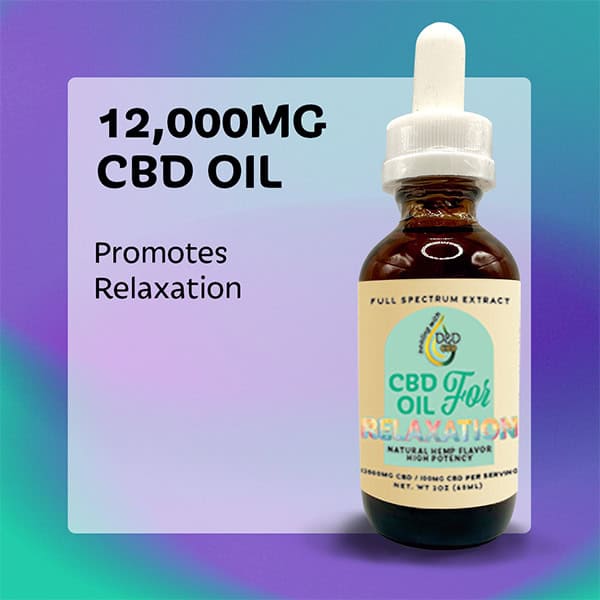
CBD works differently. It interacts with your endocannabinoid system, which plays a role in regulating stress response, mood, and physical tension. For people whose sleep is disrupted by anxiety or chronic discomfort, that’s a more targeted approach than a circadian hormone.
Why Melatonin Stops Working for So Many People
One of the most common things we hear from customers is some version of: “I started with 1mg, now I’m taking 10mg and I still wake up in the middle of the night.” That pattern has a name — it’s sometimes called the melatonin treadmill — and it happens because melatonin tolerance builds over time, and because higher doses don’t necessarily produce better sleep. Sleep researchers have actually found that lower doses, closer to 0.5 to 1mg, are often as effective as the 5 and 10mg tablets that fill most pharmacy shelves.
There’s also the grogginess problem. Melatonin has a half-life that can linger into the morning, especially at higher doses. That foggy, slow-start feeling the next day isn’t just an inconvenience — it’s your body still processing a hormone it didn’t need that much of.
For Nassau County, NY commuters catching an early LIRR train into the city, that kind of next-day sluggishness isn’t a minor side effect. It’s a real problem that affects your entire workday.
And then there’s the longer-term concern. Melatonin is a hormone, and like any hormone, taking it in excess over long periods can affect your body’s own production. Your body naturally produces melatonin — the question is whether flooding it with an external supply night after night is the right long-term strategy.
For short-term use and specific circadian disruptions, melatonin does what it’s designed to do. But if you’ve been relying on it for months or years and it’s not delivering the sleep you need, that’s worth paying attention to.
What the Research Says About CBD for Sleep
The science behind CBD and sleep is still developing, but what exists is more substantive than most people realize. A 2019 study published in the Permanente Journal found that 66.7% of people with sleep concerns reported better sleep after taking 25mg of CBD daily for one month. That’s a clinically meaningful finding from a peer-reviewed publication.
A 2024 study went a step further and found that 15mg of CBD was equally effective for improving sleep quality as 5mg of melatonin. The difference that stood out wasn’t efficacy — it was the side effect profile. CBD users in the comparison didn’t report the next-day grogginess that melatonin users commonly experience.
Other research has looked at CBD’s effect on anxiety specifically, since anxiety-driven insomnia is by far the most common type of sleep disruption in high-stress demographics. In case series research covering people with various conditions, the calming effect of CBD was associated with improved sleep scores and reduced anxiety in 79% of participants. CBD’s interaction with serotonin receptors and the endocannabinoid system directly affects the stress response that keeps so many people staring at the ceiling.
It’s also worth noting what CBD doesn’t do. Hemp-derived CBD with less than 0.3% THC is non-psychoactive. It won’t make you feel high, it won’t impair your morning, and it won’t leave you dependent on a hormone you didn’t need more of.
CBD for Insomnia in Nassau County, NY: Why the Local Context Matters
Nassau County, NY isn’t a low-stress environment. The average commute time here is 36 minutes — above both the New York State average and the national average — and that’s before you account for LIRR delays, traffic on the LIE or the Southern State, or the general weight of living adjacent to one of the most demanding cities in the world.
The dominant type of insomnia in commuter-heavy suburbs like Nassau County isn’t a circadian rhythm problem. It’s anxiety-driven. It’s the kind where your body is tired but your mind is still running the tape from the day. That specific pattern is where CBD has the clearest evidence base — and where melatonin, by design, falls short.
NYU Langone’s Sleep Medicine program in Garden City was the first in Nassau County accredited by the American Academy of Sleep Medicine, and Mount Sinai South Nassau has its own Center for Sleep Wellness on the South Shore. The fact that the county supports two dedicated institutional sleep programs tells you something about the scale of the problem here.
How to Know Which Sleep Problem You Actually Have
Not every sleep problem has the same cause, and the right solution depends on understanding what’s actually going on. If your issue is primarily about timing — you can’t fall asleep until 2am, your schedule is completely off, or you’re recovering from a red-eye flight — melatonin may be the right short-term tool.
But if you fall asleep fine and wake up in the middle of the night unable to get back down, if your thoughts are racing when you’re trying to wind down, if physical tension or chronic discomfort is waking you up — those are different problems with different causes. A circadian hormone isn’t going to address them.
Most of the people who come to us have already tried melatonin. They know it helps a little or used to help and doesn’t anymore. What they’re looking for is something that actually addresses why they’re awake — not just a signal that it’s nighttime.
One of the things we do differently at D&D CBD, Inc. is take time to actually understand what a customer is dealing with before recommending a product. We’re not a website with a shopping cart and no one on the other end. We’re available by appointment in East Northport, we offer free local delivery across Long Island, and when you reach out, you’re talking to a real person who knows the product line and has heard your situation before.
How to Choose a CBD Product You Can Actually Trust
The CBD market has a quality problem. Studies have found that many products contain significantly less CBD than what’s on the label, and some have been found to contain contaminants like pesticides or residual solvents. That’s a documented pattern that came out of the rapid, largely unregulated expansion of the CBD market.
The standard that separates legitimate products from questionable ones is third-party lab testing with a Certificate of Analysis, or COA. A COA is an independent lab report that confirms what’s actually in the product — the CBD content, the THC level, and whether it’s clean of harmful substances. Reputable companies make these available publicly. If a brand can’t show you a COA, that’s a meaningful red flag.
Every product we carry at D&D CBD, Inc. is third-party lab tested, and the Certificates of Analysis are publicly available on our website. You don’t have to take our word for it — you can look at the paperwork before you buy. We also hold active licenses from New York’s Office of Cannabis Management: OCM-HMPD-24-01160 and OCM-HMPR-26-13111-001. In a state with active cannabis regulation and a market that still has plenty of unlicensed operators, that licensing is a real form of consumer protection.
For Nassau County residents who are health-conscious and cautious about what they put in their bodies — and who have probably seen CBD products at gas stations and wondered what they’re actually getting — the COA and licensing question is worth asking of any brand you’re considering. We’re positioned specifically on the wellness side of hemp: no smokables, no flower, no vape products. If you want the benefits of hemp-derived CBD without any association with recreational cannabis, that distinction matters.
We’ve worked with customers dealing with chronic pain, anxiety, disrupted sleep cycles, and conditions that made conventional options feel inadequate. One customer told us she’d been dealing with chronic pain for ten years — that even morphine hadn’t taken it away — and after trying our products, she slept for seven and a half hours. That’s the kind of outcome that melatonin, by design, isn’t built to produce.
CBD vs Melatonin: Which One Is Right for You?
If melatonin is working for you — if it’s helping you fall asleep, you wake up clear-headed, and you’ve been using it without issue — there’s no reason to change anything. But if you’re in the much larger group of people who’ve been on melatonin for a while, feel like it’s stopped delivering, and are still waking up exhausted, it’s worth understanding why.
Melatonin adjusts your body clock. CBD addresses the stress, tension, and racing thoughts that actually keep most people awake. Those are different tools for different problems, and knowing which one fits your situation is the most useful thing you can take from this.
If you’re in Nassau County, NY and want to talk through your options with someone who actually knows the products, we’re here for that conversation. No chatbots, no automated responses — just real people at D&D CBD, Inc. who’ve helped a lot of Long Islanders finally get a decent night’s sleep.