
If you’ve typed “does CBD help arthritis” into a search bar lately, you’ve probably come back with two kinds of answers: breathless marketing claims that promise miracle relief, or overly cautious medical disclaimers that tell you basically nothing. Neither one is particularly useful when your knees are stiff every morning and you’re trying to figure out if there’s something better than taking ibuprofen every day for the rest of your life.
The honest answer sits somewhere in the middle — and it’s actually more encouraging than either extreme suggests. Here’s what the research really shows, what it doesn’t, and what it means for someone in Nassau County, NY looking for a legitimate option.
What the Research Actually Shows About CBD for Arthritis Pain
The most significant human study on this topic — a 2022 cross-sectional study published in the Journal of Cannabis Research — surveyed 428 people with arthritis who were already using CBD. The results were notable: 83% reported improvements in pain, 66% saw improvements in physical function, and 66% reported better sleep quality. Those aren’t small numbers.
What made the study particularly striking was the medication piece. More than 60% of respondents had reduced or stopped other medications after starting CBD. That included anti-inflammatories, acetaminophen, and — importantly — opioids. Nearly 19% had discontinued opioid use entirely.
In Nassau County, NY, where the opioid crisis has hit harder than most regions, that finding carries real weight. A lot of people here are specifically looking for something that works without the risks that come with long-term prescription pain medication use.
A 2024 review published in the journal Pharmaceuticals looked at 40 pain treatment studies and concluded that CBD “could be an effective and safe treatment in reducing pain due to its analgesic and anti-inflammatory properties.” The researchers noted that more clinical trials are still needed — and that’s worth acknowledging honestly — but the direction of the evidence is consistent.
How Does CBD Work for Arthritis? The Mechanism Behind the Relief
Your body has a built-in regulatory system called the endocannabinoid system, or ECS. It’s involved in managing pain signals, inflammation, immune response, and sleep — essentially a lot of the things that go wrong with arthritis. CBD interacts with this system, which is why researchers believe it may help with the specific symptoms arthritis patients deal with most: joint pain, stiffness, disrupted sleep, and the chronic low-grade inflammation that drives both osteoarthritis and rheumatoid arthritis.
Osteoarthritis is the more common type — it’s the wear-and-tear kind, where the cartilage between joints breaks down over time. Rheumatoid arthritis is an autoimmune condition, where the body’s immune system attacks the joint lining. CBD’s potential anti-inflammatory properties make it relevant to both, though the mechanisms differ slightly.
For osteoarthritis, the pain-modulating effects are the primary draw. For rheumatoid arthritis, the immune-modulating and anti-inflammatory properties are what researchers are paying closer attention to.
There’s also a delivery method dimension worth understanding. Oral CBD — oils, gummies, capsules — enters the bloodstream and works systemically, which means it can address pain throughout the body and also support sleep and anxiety. Topical CBD — salves, creams, patches — works more locally, targeting a specific joint or area.
Research suggests topical application may produce around 30% pain reduction for hand arthritis, which is meaningful for people who struggle with grip strength or finger joint pain. A 24-hour patch, like the Ameo Entune CBD Patch we carry, offers a particularly practical option for arthritis sufferers — no fumbling with droppers or remembering to reapply, just consistent delivery throughout the day and overnight.
The “entourage effect” is another concept worth knowing. Full-spectrum CBD products contain trace amounts of other cannabinoids and plant compounds alongside CBD. The theory — supported by a growing body of research — is that these compounds work better together than CBD alone. For arthritis specifically, most practitioners who work with CBD recommend full-spectrum or broad-spectrum products over isolates for this reason.
Hemp Oil for Arthritis: Is It the Same Thing as CBD Oil?
This is one of the most common points of confusion in the CBD space, and it’s worth clearing up before you spend money on the wrong product. Hemp oil and CBD oil are not the same thing — and the difference matters a lot if you’re trying to address arthritis pain.
Hemp seed oil is pressed from the seeds of the hemp plant. It’s nutritious — rich in omega fatty acids — and it’s a legitimate ingredient in plenty of food and skincare products. But it contains no CBD. None. If you buy a product labeled “hemp oil” without any mention of cannabidiol, milligram content, or a Certificate of Analysis, there’s a good chance you’re buying a nutritional oil that will do nothing for your joints.
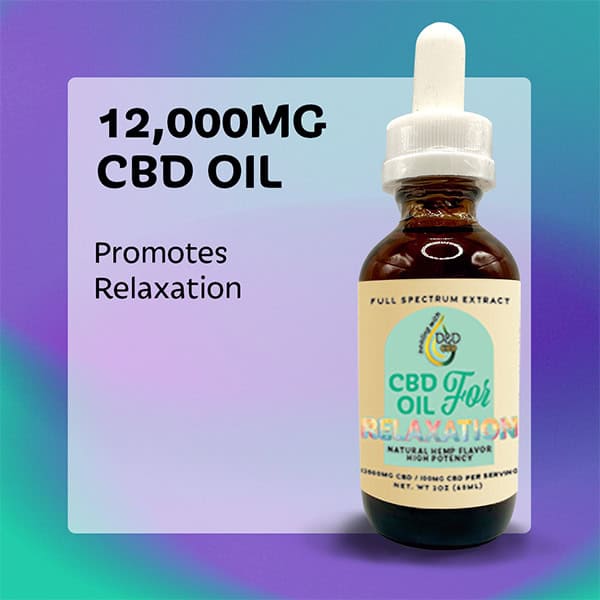
CBD oil — more accurately called hemp-derived CBD oil — is extracted from the flowers, leaves, and stalks of the hemp plant, where the actual cannabinoids live. A quality product will clearly state the CBD content in milligrams, disclose whether it’s full-spectrum, broad-spectrum, or isolate, and back it up with a third-party lab report. That lab report — called a Certificate of Analysis, or COA — is your proof that the product contains what it claims and doesn’t contain what it shouldn’t (pesticides, heavy metals, residual solvents, and so on).
The reason this confusion persists is partly because some brands exploit it. “Hemp and arthritis” searches turn up a lot of products that are technically hemp-derived but contain negligible CBD. The label looks similar, the marketing language sounds similar, and the price point is often lower — because the product is genuinely less expensive to produce. This is one of the most common reasons people try CBD, feel nothing, and conclude it doesn’t work. In many cases, they were never actually taking CBD in a meaningful dose to begin with.
When you’re evaluating any CBD product for arthritis, look for the milligram count, the spectrum type, and the COA. If any of those three things are absent or hard to find, that’s your answer about whether the brand is worth trusting.
What to Look for in a CBD Product for Arthritis
The CBD market has a quality problem. That’s not an opinion — it’s been documented repeatedly. Products have been found to contain significantly less CBD than labeled. Others have tested positive for contaminants. The 2010s CBD boom brought a flood of brands to market, many of which were more interested in capitalizing on the trend than in producing something that actually worked.
For Nassau County, NY residents who are already skeptical — and reasonably so — this matters. The question isn’t just “does CBD work for arthritis?” It’s “does this specific product work?” And the honest answer is that a well-made, properly dosed, third-party tested CBD product and a mislabeled supplement with trace amounts of CBD are not going to produce the same results.
How to Tell If a CBD Product Is Actually Worth Buying
Start with the Certificate of Analysis. A COA is a report from an independent, accredited third-party laboratory that verifies what’s actually in the product — cannabinoid potency, THC levels, and a screen for contaminants including pesticides, heavy metals, and microbiological issues. A reputable brand makes these available publicly, by batch, without you having to request them. If a brand’s COA is hard to find, generic, or nonexistent, move on.
Next, look at the spectrum type. Full-spectrum products contain the full range of cannabinoids found in the hemp plant, including trace THC (under 0.3% — not enough to produce any psychoactive effect). Broad-spectrum products have the THC removed but retain other cannabinoids. Isolates are pure CBD with everything else stripped away. For arthritis, most practitioners and researchers lean toward full-spectrum or broad-spectrum because of the entourage effect — the idea that the cannabinoids work better in combination. If you have concerns about drug testing, broad-spectrum is the safer choice.
Dosage is the third piece. Standard guidance for someone new to CBD is to start low — around 10 to 20 milligrams per day — and increase gradually until you find what works for your body. Arthritis pain that’s been building for years isn’t going to resolve in a day, and CBD isn’t a one-size-fits-all situation. Weight, metabolism, the severity of your symptoms, and the delivery method all affect how much you need and how quickly you feel it.
Finally, look for state licensing. In New York, the Office of Cannabis Management licenses and regulates hemp manufacturers and retailers. A licensed operator has been vetted by the state — that’s a meaningful layer of accountability that most online CBD sellers simply don’t have. We hold two New York State OCM licenses (OCM-HMPD-24-01160 and OCM-HMPR-26-13111-001), and we make our COAs publicly available for every product we sell.
CBD for Arthritis in Nassau County, NY: What Local Buyers Should Know
Nassau County, NY winters are brutal for arthritis. Cold, damp air is one of the most consistently reported triggers for arthritis flare-ups — joint stiffness, increased pain, and reduced range of motion that makes everyday tasks harder than they should be. If you’re catching the LIRR into the city every morning, sitting in a cold car, or just navigating a Long Island winter, you already know what we’re talking about. The seasonal reality here is different from a warmer climate, and it creates a real, predictable spike in joint pain that a lot of Nassau County residents are managing with whatever they can find.
We’re based in East Northport, right on the Nassau-Suffolk border, and we serve Nassau County, NY customers directly — with free local delivery available upon request and a product line that’s been built specifically around wellness, not recreational use. No smokables, no flower, nothing that blurs the line between CBD and cannabis. Just products that are third-party tested, properly labeled, and backed by a real person you can actually reach.
We’ve been featured in the Long Island Press and The Northport Observer, we’re members of the Huntington Chamber of Commerce, and we’ve built this business on the kind of transparency that’s still surprisingly rare in this industry. Every review we’ve received — more than 50 of them, all five stars — gets a personal response from us, not a template.
If you’ve been burned by a low-quality product before, or if you’re still in the “I’ve heard mixed things” phase, we get it. That skepticism is earned. What we’d ask is that you look at the evidence, look at our COAs, and then make the call.
Is CBD Good for Arthritis? Here’s the Honest Bottom Line
The research says yes — with caveats. CBD is not a cure for arthritis. It doesn’t reverse joint damage or stop the underlying disease process. What it may do, based on the best available evidence, is meaningfully reduce pain, improve sleep, and restore some of the physical function that chronic joint pain takes away. For a significant number of people, it has also made it possible to reduce reliance on other medications.
The caveats are real: product quality varies enormously, dosing takes some trial and adjustment, and the research — while promising — is still building. Anyone who tells you CBD is guaranteed to work for your arthritis is overselling it. Anyone who tells you the evidence isn’t there yet hasn’t looked at it recently.
If you’re in Nassau County, NY and you want to talk through your options with someone who actually knows this space — not a chatbot, not a form submission that disappears into a queue — reach out to us at D&D CBD, Inc. We’ll give you a straight answer.