
Most articles about home remedies for restless legs give you the same five tips. Warm bath. Stretch before bed. Cut back on caffeine. And if you’ve been dealing with this for any length of time, you’ve probably tried all of them — maybe more than once. Some help a little. Some don’t help at all. And none of them seem to stick.
That’s not a failure on your part. RLS is a neurological condition, and it doesn’t always respond to surface-level fixes. So instead of recycling the same advice, we want to give you a real picture of what’s going on, what the evidence actually supports, and what options are worth considering when the standard list runs out.
Natural Remedies for RLS: What the Evidence Actually Says
Restless legs syndrome — clinically known as Willis-Ekbom disease — is driven by the nervous system, not the legs themselves. Dopamine levels drop in the evening, which is why symptoms almost always worsen at night, right when you’re trying to wind down. That timing isn’t random. It’s neurological. And understanding that changes how you think about treatment.
The good news is that several natural approaches do have legitimate support behind them — not just anecdotal, but backed by real mechanisms. The challenge is knowing which ones are worth your time and which ones are mostly placebo dressed up as advice.
Iron and Magnesium: The Nutrient Connection Most People Miss
Iron deficiency is one of the most well-documented contributors to restless legs syndrome, and it’s one that often goes undetected. You can have low ferritin — the stored form of iron — without being technically anemic, and standard blood panels don’t always catch it. If you haven’t had your ferritin levels checked specifically, it’s worth asking your doctor.
The general target for RLS management is to be on the high side of the normal range, not just within it. Magnesium is another nutrient that comes up consistently in natural RLS management. It plays a role in nerve signaling and muscle relaxation, and low levels are associated with increased nerve excitability — which is the last thing you want when you’re already dealing with that crawling, restless sensation.
Epsom salt baths, which contain magnesium sulfate, are popular partly because they address both the topical soothing effect and a mild transdermal magnesium boost at the same time. Neither of these is a guaranteed fix, and the degree of benefit depends heavily on whether a deficiency is actually present. But if you haven’t explored your nutrient levels, that’s a reasonable first step — and it’s one that can be addressed without a prescription.
Beyond iron and magnesium, other nutrients have come up in research on RLS, including folate, B12, and vitamins C and E. The evidence is thinner for these, but for people who’ve already addressed iron and still aren’t getting relief, they’re worth a conversation with your doctor. The broader point is that RLS often has an underlying physiological driver — and correcting that driver can sometimes do more than any surface-level remedy.
Why Medications Sometimes Make Restless Legs Worse Over Time
This is the part that doesn’t get talked about enough. Many people with RLS are prescribed dopamine agonists — medications like pramipexole or ropinirole — and they work well at first. But a well-documented phenomenon called augmentation means that with long-term use, these drugs can paradoxically make symptoms worse.
Symptoms start appearing earlier in the day. They spread to other parts of the body. The dose that used to work stops working. And patients find themselves on an escalating cycle with diminishing returns. If this sounds familiar, you’re not imagining it. Augmentation is real, it’s documented in the medical literature, and it’s one of the main reasons people start searching for alternatives.
It doesn’t mean nothing will work — it means the mechanism that medication was targeting is no longer responding the same way. This is also why natural approaches are worth taking seriously, not as a replacement for medical care, but as a parallel strategy. Lifestyle modifications, nutrient correction, and supplements like CBD work through different pathways than dopamine agonists. They’re not trying to force the same door that’s already been worn out.
For some people — particularly those who’ve been through the medication cycle and come out frustrated — that difference matters a great deal. The honest answer is that there’s no single remedy that works for everyone. But if your current approach has stopped working, or never really worked to begin with, that’s not a reason to give up. It’s a reason to look at what you haven’t tried yet.
Natural Restless Leg Cure: Is There Such a Thing?
Here’s the straight answer: there is no confirmed cure for restless legs syndrome. Not pharmaceutical, not natural, not surgical. What does exist is effective management — and for many people, that means finding the right combination of approaches that keeps symptoms controlled enough to sleep, function, and live normally.
That distinction matters because it sets realistic expectations. You’re not looking for a magic fix. You’re looking for what moves the needle enough to make a real difference in your quality of life. And for a growing number of people, CBD has become part of that answer.
Can CBD Help With Restless Leg Syndrome?
CBD interacts with the body’s endocannabinoid system — a regulatory network that influences mood, pain perception, inflammation, and sleep. Research suggests that CBD may help control dopamine levels, reduce inflammation, and promote a state of relaxation in the nervous system. For RLS sufferers, those three effects are directly relevant to the core problem: an overactive nervous system that won’t settle down when it’s supposed to.
There’s no FDA-approved CBD medication for RLS yet, and we’re not going to overstate what the evidence shows. But the anecdotal record is substantial, and the mechanism makes sense. People who have tried CBD for RLS often describe better sleep quality, less intensity in their symptoms, and a general sense of calm that makes the nighttime hours more manageable.
What matters as much as whether to try CBD is how you try it. Product quality in this space varies enormously. Consumers have been burned by mislabeled products, false potency claims, and inconsistent formulations — and that experience has made a lot of people skeptical, reasonably so. The difference between a product that works and one that doesn’t often comes down to whether it’s been independently tested by a third-party lab, and whether the brand can actually show you those results.
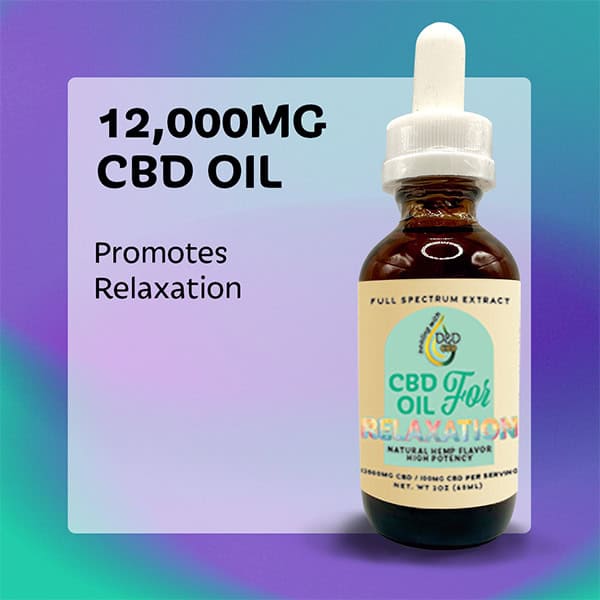
At D&D CBD, Inc., every product we carry is third-party lab tested, and the Certificates of Analysis are publicly available. We hold dual New York OCM licenses — #OCM-HMPD-24-01160 and #OCM-HMPR-26-13111-001 — which means we operate under active state oversight, not just a general claim of compliance. We also don’t sell smokables or flower. Our entire product line is wellness-focused: tinctures, topical salves, 24-hour transdermal patches, gummies, and pet products.
Which CBD Format Works Best for Restless Legs?
This is a practical question, and the answer depends on how your symptoms present. For people whose RLS is concentrated in a specific area — usually the lower legs — a topical CBD salve applied directly to the affected area can help soothe the sensation locally. It’s not systemic, but for localized discomfort, it doesn’t need to be.
For the sleep disruption side of RLS, a sublingual CBD oil taken under the tongue is typically more effective. It enters the bloodstream faster than an edible and can help calm the nervous system before bed. Gummies are another option — they take longer to kick in, but they also last longer, which makes them well-suited for symptoms that tend to peak in the middle of the night rather than right at bedtime.
Our 24-hour transdermal patches are worth mentioning specifically for RLS. Unlike a topical that you apply and absorb quickly, a transdermal patch releases CBD slowly and consistently over an extended period. For someone whose legs are most disruptive between 2 and 4 a.m., that sustained delivery can matter more than a single dose taken at 10 p.m.
For Nassau County, NY residents who spend 60 to 90 minutes a day sitting on the Long Island Rail Road or crawling along the Long Island Expressway, the evening symptom flare-up often starts before you even get home. Prolonged sitting is one of the most consistent RLS triggers — symptoms typically begin or worsen after extended time in a sedentary position. By the time you’re finally off the train and in bed, your legs have already been primed for a rough night.
A consistent CBD routine — especially one that combines a sublingual oil in the evening with a transdermal patch overnight — addresses that pattern more directly than a single remedy applied at bedtime. Our subscription pricing makes that kind of consistent routine more affordable. CBD oil drops that retail at $100 come down to $90 per month on subscription, and first-time customers get 10% off their initial order when they sign up for our newsletter. We also offer free local delivery throughout Nassau County, so there’s no minimum order threshold standing between you and getting started.
The Best Remedy for Restless Legs Is the One That’s Honest With You
There’s no shortage of advice on restless legs. What’s harder to find is advice that’s actually straight with you — that acknowledges the limits of standard remedies, doesn’t pretend CBD is a cure, and gives you enough real information to make a decision that fits your situation.
That’s what we try to do at D&D CBD, Inc. We’re a family-owned business based on Long Island, and the people you talk to when you reach out are the same people who built this brand. No chatbots, no scripts — just a real conversation about what you’re dealing with and whether what we carry might help.
If you’ve been managing restless legs for a while and feel like you’ve exhausted your options, you may not have. Reach out to D&D CBD, Inc. and let’s figure out where to start.