
You’ve probably seen it happen. Someone tries “hemp oil” for their knee pain, feels nothing, and writes the whole category off. The frustrating part? They may have never actually tried CBD. The two products are not the same thing — they come from different parts of the plant, work through completely different mechanisms, and produce very different results. If you’re living with chronic knee pain, stiff joints, or the kind of inflammation that makes climbing stairs feel like a project, you deserve a straight answer about what you’re actually putting in your body. Let’s start there.
Hemp Seed Oil for Joint Pain: What It Is and What It Isn’t
Hemp oil — the kind you’ll find at Trader Joe’s or on a grocery store shelf — is hemp seed oil. It’s made by cold-pressing the seeds of the hemp plant, and it’s genuinely nutritious. It’s rich in omega-3 and omega-6 fatty acids, contains vitamins and minerals, and has real anti-inflammatory benefits through nutrition. For general health support, it’s a solid product.
What it doesn’t contain is cannabidiol. Hemp seeds carry little to no cannabinoids, which means hemp seed oil doesn’t interact with your endocannabinoid system the way CBD does. If you’re hoping it’ll take the edge off chronic knee pain or reduce joint inflammation at a therapeutic level, you’re working with the wrong tool. The confusion between these two products is widespread, well-documented, and — frankly — exploited by brands that know most consumers won’t read the fine print.
Hemp Oil for Knee Pain Specifically: Will It Help?
Here’s where it gets nuanced. Hemp seed oil isn’t useless for joint health — it just works differently than CBD. The omega-3 fatty acids in hemp seed oil, particularly alpha-linolenic acid (ALA), contribute to reducing systemic inflammation over time. If you’re using it consistently as part of a healthy diet, you may notice some long-term benefit for general inflammation.
But that’s a slow, nutritional process — not the kind of targeted relief most people are looking for when their knee is aching after a walk through Eisenhower Park or a round of golf at one of Nassau County’s courses.
What hemp seed oil cannot do is interact with the cannabinoid receptors in your joints. And that distinction matters enormously, because peer-reviewed research has confirmed that the endocannabinoid system (ECS) is actually present within the synovium — the lining of your joints. CB1 and CB2 receptors exist right there in joint tissue. Hemp seed oil doesn’t reach them. CBD does.
So when someone says “I tried hemp oil and it didn’t do anything for my knee,” the honest response is: that’s not surprising, and it doesn’t mean CBD won’t work. It means they tried a nutritional oil when they needed a cannabinoid. The product on the label matters. The source of the extract matters. And unfortunately, in a market flooded with vaguely labeled products, a lot of people are buying one thing and expecting results from another.
If you’re in Nassau County, NY and you’ve had this exact experience, you’re not alone. We hear it regularly from customers in Massapequa, Great Neck, and across the island. Someone picked up a bottle at a local pharmacy or ordered something online that said “hemp” on the label, used it for two weeks, and concluded CBD doesn’t work. In most of those cases, they were never using CBD to begin with.
Reading the Label Before You Buy Hemp Oil for Joint Pain
This is where the mislabeling problem gets real. The hemp wellness market has grown fast, and the labeling hasn’t kept up. Some products say “hemp oil” when they mean hemp seed oil. Others say “hemp extract” when they mean CBD-rich oil from the flowers and leaves. A few say “full-spectrum hemp” without telling you how much cannabidiol is actually in the bottle. And some say “CBD” on the front while listing hemp seed oil as the primary ingredient on the back.
The rule of thumb: if you’re looking for CBD, the label should list cannabidiol, full-spectrum hemp extract, or broad-spectrum hemp extract — and it should list a milligram amount of CBD per serving. If the only thing you see is “hemp seed oil” or “Cannabis sativa seed oil” in the ingredient list, that’s a nutritional product, not a cannabinoid product. It will not interact with your ECS.
A Certificate of Analysis (COA) from a third-party lab is the clearest way to verify what’s in a product. A COA shows the actual cannabinoid content — how much CBD, how much THC, whether CBG or CBN are present — along with testing for heavy metals, pesticides, and contaminants. If a brand won’t show you a COA, that tells you something important.
At D&D CBD, Inc., every product we carry comes with publicly available COA documentation. We hold two active New York State Office of Cannabis Management licenses (OCM-HMPD-24-01160 and OCM-HMPR-26-13111-001), which means we’re operating under state-level regulatory oversight — not just federal guidelines. For Nassau County, NY residents who’ve been burned by unlabeled or misleading products at gas stations or online marketplaces, that kind of verification isn’t just reassuring — it’s the baseline you should expect from any CBD seller you trust.
CBD Oil for Joint and Muscle Pain: How It Actually Works
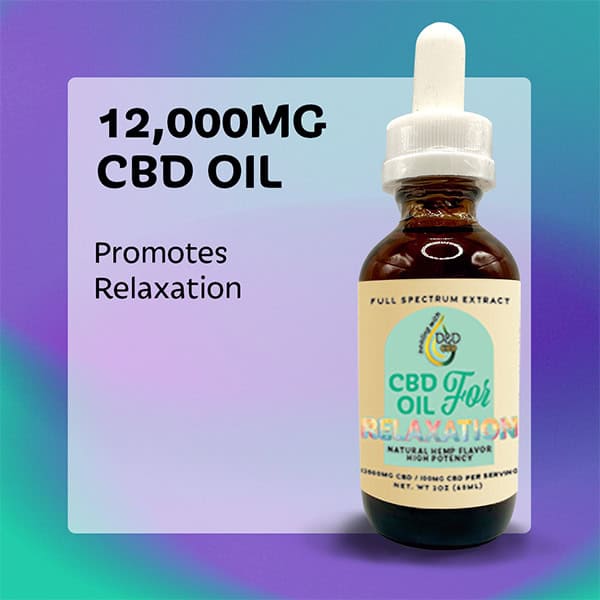
CBD oil is extracted from the flowers, leaves, and stalks of the hemp plant — not the seeds. It contains cannabidiol along with other naturally occurring cannabinoids, terpenes, and flavonoids that interact directly with your endocannabinoid system. That system runs throughout your body and plays a significant role in how you perceive pain and regulate inflammation.
What makes CBD particularly relevant for knee pain is that cannabinoid receptors aren’t just in your brain or nervous system — they’re in your joints. Research published in peer-reviewed journals has confirmed CB1 and CB2 receptors in the synovium of human joints, which means CBD has a direct pathway to the tissue where the pain is actually originating. That’s not a marketing claim. It’s the biology behind why CBD may work for joint pain in a way that hemp seed oil simply cannot.
What Does the Research Actually Say About CBD for Knee Pain?
The honest answer is that the research is promising but still developing. There are well-designed studies showing real results, and there are studies that found limited effects. Anyone telling you CBD is a guaranteed cure for arthritis or knee pain is overstepping what the science currently supports. But dismissing it entirely ignores a growing body of evidence that’s worth taking seriously.
A 2022 randomized controlled trial of 18 patients found that topical CBD improved both pain scores and disability measures in people with thumb joint arthritis. A 2024 trial using transdermal CBD found statistically significant reductions in pain scores and meaningful improvements in grip strength over the treatment period. Animal studies have shown CBD can reduce joint swelling, pain, and tissue damage in arthritis models. And a separate 2022 RCT of 129 patients with osteoarthritis and psoriatic arthritis found mixed results — which is why we think it’s important to be upfront about what’s known and what isn’t.
What we do know is that CBD appears to influence anandamide, a naturally occurring compound in the body associated with pain reduction. By modulating anandamide levels, CBD may help change how your body processes pain signals — not by numbing you, but by working with systems your body already has in place.
One of our customers described living with chronic pain for ten years. She’d tried morphine. She woke up one morning after using our products and wrote: “I still have pain but not as intense — and even morphine didn’t take it away. I slept for seven and a half hours.” That’s not a clinical trial. But it’s a real person describing a real, measurable change in her quality of life. For someone who’s exhausted every conventional option, that kind of outcome matters.
CBD for Knee Pain in Nassau County: Which Format Makes Sense for You?
Most people think of CBD as oil drops or a topical cream. Those are both legitimate options — but they’re not the whole picture, and for knee pain specifically, the format you choose can make a meaningful difference in how well it works for you.
Topical salves are applied directly to the knee and work locally. They’re good for targeted, surface-level relief and are easy to incorporate into a routine. The limitation is duration — most topicals wear off within a few hours, and you’ll need to reapply throughout the day. If your knee pain is constant and you’re commuting into the city on the LIRR or spending long hours on your feet, reapplying a cream every few hours isn’t always practical.
CBD oil drops taken sublingually — held under the tongue for about two minutes before swallowing — provide more systemic support. They take longer to kick in than a topical, but they work throughout your body rather than just at the application site. For someone dealing with both knee pain and general inflammation or muscle soreness, this broader coverage is often more useful.
The option most people don’t know about is the transdermal CBD patch. Our Ameo Entune CBD Patch — what we call “Wear the Square” — delivers cannabinoids through the skin and into the bloodstream over a full 24 hours. Unlike a topical that sits on the surface, a transdermal patch bypasses first-pass liver metabolism and provides consistent absorption throughout the day. You put it on in the morning and don’t think about it again. For someone with chronic knee pain who needs sustained, all-day relief without constant re-dosing, it’s a fundamentally different experience than anything else on the market.
We also carry CBD gummies for people who prefer a simple, consistent daily format, and tinctures that combine CBD with CBN and CBG — additional cannabinoids that bring their own anti-inflammatory and pain-modulating properties. The right choice depends on your situation, your lifestyle, and how your body responds. That’s why we offer consultations by appointment at our East Northport location, and why we’re happy to talk through the options with anyone in Nassau County, NY before they spend a dollar.
Which Hemp Product Should You Actually Use for Knee Pain?
If you take one thing from this page, let it be this: hemp seed oil and CBD oil are not interchangeable. One is a nutritional product pressed from seeds. The other is a cannabinoid extract that interacts with receptors inside your joint tissue. If you’ve tried “hemp oil” and felt nothing, you likely never tried CBD at all.
For knee pain specifically, CBD has a plausible biological mechanism, emerging clinical evidence, and a growing number of real people — including our own customers — reporting meaningful improvements in pain, sleep, and mobility. It’s not a cure, and we’ll never tell you it is. But it’s worth understanding what it actually does before writing it off based on a mislabeled product.
If you’re in Nassau County, NY and you want a straight conversation about which format might work for your situation, reach out to D&D CBD, Inc. We’re here, we’re licensed, and every product we carry comes with the lab documentation to back it up. We’re a real family — Dean, Debbie, and Brandon Nichol — and we’d rather you find the right product than buy the wrong one.