
If you’ve typed “CBD for inflammation” into a search bar, you’ve probably already waded through a lot of noise. Some pages promise it cures everything. Others dismiss it entirely. Neither extreme is particularly useful when you’re dealing with real, daily pain that conventional approaches haven’t fully solved.
The truth is somewhere in the middle — and it’s actually more interesting than either camp lets on. There’s real biology behind how CBD interacts with inflammation in the body. There’s also a serious quality problem in the CBD market that most people don’t know about. Both things matter if you’re trying to figure out whether this is worth your time.
How CBD Interacts with Inflammation in the Body
CBD doesn’t work the way most over-the-counter anti-inflammatories do. It doesn’t just block a single pain signal or suppress one enzyme. It works through the endocannabinoid system — a regulatory network your body already has — and the effects are more nuanced than a simple on/off switch.
Understanding that distinction matters, because it changes how you think about what CBD can realistically do and why consistent use tends to produce better results than a single dose.
What Does the Endocannabinoid System Have to Do with Inflammation?
Your endocannabinoid system, or ECS, is a signaling network that runs throughout your body and plays a major role in regulating pain, immune response, mood, and sleep. It operates through two main receptor types — CB1 and CB2. CB1 receptors are concentrated in the brain and central nervous system. CB2 receptors are found primarily in immune tissues, which makes them directly relevant to how your body manages inflammation.
CBD doesn’t bind to these receptors the way THC does. Instead, it modulates them — influencing how they respond to other signals. On the pain side, CBD also interacts with TRPV1 channels, which are sensory receptors involved in how your body perceives pain, heat, and inflammation. By desensitizing those channels, CBD may reduce the intensity of the pain signal itself, not just the inflammation driving it.
Here’s where the science gets genuinely interesting. Research published in Chemistry World identified a specific molecular mechanism: CBD suppresses the formation of leukotrienes, which are pro-inflammatory signaling molecules, while simultaneously activating a lipoxygenase enzyme that shifts the body’s chemistry toward specialized pro-resolving mediators, or SPMs. That’s not just inflammation suppression — that’s the body being nudged toward actively resolving inflammation rather than just dampening it. That’s a meaningful distinction.
A 2020 review in the European Journal of Pain found meaningful evidence for CBD reducing neuropathic and inflammatory pain, with the clearest results in conditions with an inflammatory or nerve-damage component. A 2024 systematic review in Pain Management Nursing affirmed CBD’s use in chronic pain management while noting that larger clinical trials are still needed. The science is promising and growing — it’s not settled, but it’s also not nothing.
Acute vs. Chronic Inflammation — Why the Difference Matters for CBD
Not all inflammation is the same, and that distinction shapes how CBD fits into the picture. Acute inflammation is your body’s short-term protective response — the swelling around a sprained ankle, the heat in a fresh bruise. It’s uncomfortable, but it’s doing its job. You probably don’t need CBD for that.
Chronic inflammation is a different animal entirely. It’s the kind that lingers for months or years, often without an obvious cause or injury to point to. It’s associated with conditions like osteoarthritis, rheumatoid arthritis, inflammatory bowel disease, and a range of autoimmune disorders. It’s also increasingly linked to the kind of low-grade systemic inflammation that builds up quietly over time — the type that doesn’t announce itself until it starts limiting what you can do.
This is where most people in Nassau County, NY who are asking about CBD for inflammation actually live. Not in the acute phase, but in the chronic one. The person who can’t get through a round of golf without their knee flaring up. The commuter who spends an hour each way on the LIRR or inching along the LIE and gets off with a stiff neck and aching lower back that never quite goes away. The person who’s been managing joint pain for a decade and is tired of what the conventional options are doing to their stomach.
For chronic inflammation specifically, CBD’s most discussed application makes the most biological sense. The ECS is a regulatory system — it works toward balance, not just suppression. And because chronic inflammation is essentially a regulatory failure (the body’s inflammatory response stuck in the “on” position), a compound that works through that same regulatory network is a logical place to look for support. That doesn’t mean CBD will work for everyone. But the mechanism isn’t guesswork.
Why the Product You Choose Matters as Much as the Compound
Here’s something most CBD content won’t tell you directly: only about 26% of CBD products on the market actually meet full label standards. That means the majority of what’s being sold — online, in convenience stores, at pop-up booths — is either mislabeled, underdosed, or contains contaminants that were never disclosed.
That’s not a reason to avoid CBD. It’s a reason to be selective about where you get it. If a product doesn’t contain what the label says, no amount of research into the science of CBD is going to help you.
How to Tell If a CBD Product Is Actually What It Claims to Be
The most important thing to look for is a Certificate of Analysis, or COA, from an independent third-party lab — not a test the company ran on its own products, but one conducted by a lab with no financial stake in the outcome. A legitimate COA will show the actual cannabinoid content (how much CBD, THC, CBN, CBG), and it will confirm the absence of heavy metals, pesticides, residual solvents, and microbial contaminants.
One detail people often overlook: the batch or lot number on your product should match the batch number on the COA. That’s how you know the test applies to what you’re actually holding, not some earlier run that may have been formulated differently. If a brand can’t show you a matching COA, that’s a problem.
In New York State, there’s an additional layer of accountability worth knowing about. The Office of Cannabis Management requires cannabinoid hemp product retailers and distributors to be licensed — there are two distinct license types, one for distribution and one for retail sales. A licensed seller in Nassau County, NY has gone through a regulatory process that unlicensed competitors haven’t. It’s not a guarantee of quality on its own, but it’s a meaningful baseline that many CBD sellers across Long Island simply don’t meet.
We make our COAs publicly available on our website. Our license numbers — OCM-HMPD-24-01160 and OCM-HMPR-26-13111-001 — are displayed in our site footer. We’re not asking you to take our word for anything. The documentation is there if you want to verify it.
Does the Format of CBD You Use Actually Change How It Works for Inflammation?
Yes — and this is a gap that most CBD content completely ignores. Oils, topicals, gummies, and transdermal patches don’t all work the same way, and the right choice depends on what kind of inflammation you’re dealing with and where it is in your body.
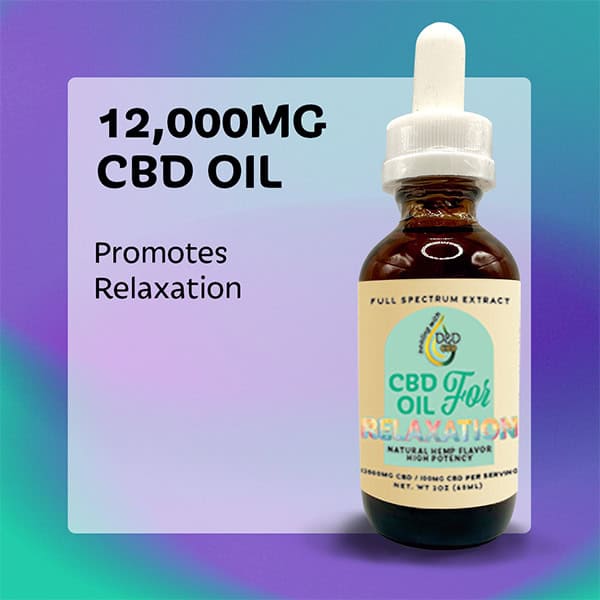
A sublingual tincture — the kind you hold under your tongue — absorbs into the bloodstream relatively quickly and works systemically. That means it’s circulating throughout your body, which makes it a reasonable choice for widespread or systemic inflammation. Our tinctures are formulated with CBD alongside CBN and CBG, two additional cannabinoids that contribute to the overall effect.
A topical salve works differently. It doesn’t enter the bloodstream — it acts locally, right where you apply it. For a specific joint, a sore muscle, or a localized flare-up, that targeted application can be exactly what’s needed. Our vegan topical salves are formulated for that kind of direct, localized relief.
Then there are transdermal patches, which are something different again. Unlike a topical that sits on the surface, a transdermal patch is designed to deliver CBD through the skin and into the bloodstream over an extended period — ours are 24-hour patches. For someone dealing with chronic joint inflammation who wants steady, time-released support rather than a single dose, that sustained delivery model makes a real practical difference. One of our customers described being able to use the elliptical with full arm movement for the first time after using the patches for heel pain — something she hadn’t been able to do before, even with other interventions.
The honest answer to “which format is right for me?” depends on your specific situation. That’s exactly why we offer in-person consultations by appointment at our East Northport location, and why we’re available for questions — because a one-size-fits-all recommendation isn’t actually useful when you’re dealing with real pain.
What Nassau County Residents Should Know Before Trying CBD for Inflammation
CBD for inflammation isn’t a miracle, and any brand that tells you otherwise isn’t being straight with you. What it is — based on the available research — is a pharmacologically grounded option with real mechanisms of action, a growing body of evidence, and a track record among people dealing with chronic pain that’s hard to dismiss.
The catch is that it only works if the product is legitimate. In a market where most CBD products don’t meet label standards, that matters more than the science itself.
If you’re in Nassau County, NY and you want to explore CBD for inflammation without the guesswork, we’re a family-owned, NYS-licensed wellness brand based right here on Long Island. We’re not a dispensary, we don’t sell smokables, and you’ll always be talking to a real person. Reach out when you’re ready — we’re happy to help you figure out where to start.