
If you’ve spent any time researching CBD for joint pain, you’ve probably run into a wall of product pages, vague health claims, and roundups that all say the same thing. What you haven’t found — until now — is a straight answer to the question you’re actually asking: which format is going to help with my specific pain, and how do I know I’m buying something real?
That’s what this guide is for. We’ll walk through how CBD works for joint pain, what separates oils from topicals from gummies from patches, and what actually matters when you’re choosing a product. No fluff, no overselling — just the information you need to make a confident decision.
How CBD Works for Joint Pain
Your body has a built-in system called the endocannabinoid system — or ECS — that helps regulate pain, inflammation, sleep, and immune response. CBD interacts with receptors in this system, particularly the ones found in joint tissue, nerve endings, and immune cells. That’s why so many people find it useful for managing the kind of persistent, inflammation-driven pain that comes with arthritis and joint wear.
A 2022 study published in the Journal of Cannabis Research followed 428 participants with arthritis or joint pain. Eighty-three percent reported a reduction in pain. Sixty-six percent saw improved physical function. And 60.5% were able to reduce or eliminate their conventional pain medications — reporting an average 44% reduction in pain overall. Those aren’t marketing numbers. That’s peer-reviewed research.
CBD isn’t a cure, and we’d never tell you it is. But for people who’ve been managing joint pain for years and are looking for something that doesn’t come with a long list of side effects or dependency risks, it’s worth understanding how it actually works — and which format fits your situation best.
Full-Spectrum vs. Broad-Spectrum vs. Isolate CBD
Before you compare formats, it helps to understand what’s actually in the product. Hemp-derived CBD comes in three main types, and the differences matter more than most brands let on.
Full-spectrum CBD contains all the naturally occurring cannabinoids, terpenes, and trace compounds found in the hemp plant — including a small amount of THC (no more than 0.3%, which is the federal legal limit). The reason this matters is something called the entourage effect: the idea that these compounds work better together than any single one does on its own. For chronic joint pain and inflammation, full-spectrum products are generally considered the most effective option because you’re getting the full range of the plant’s therapeutic activity.
Broad-spectrum CBD is similar to full-spectrum but with the THC removed entirely. It still retains most of the other cannabinoids and terpenes, so you get some of the entourage effect without any THC. This is a good middle-ground option for people who are concerned about THC showing up on a drug test or who simply prefer to avoid it altogether.
CBD isolate is exactly what it sounds like — pure CBD, with everything else stripped away. It’s the most processed form and generally considered the least effective for pain management because you’re losing the synergistic benefits of the other compounds. That said, it’s predictable and consistent, which some people value.
For joint pain specifically, full-spectrum hemp-derived CBD tends to produce the strongest results. All of our products at D&D CBD, Inc. are produced in strict compliance with federal regulations, containing 0.3% THC or less. Every batch is third-party lab tested, and the Certificates of Analysis are publicly available on our website so you can verify exactly what you’re getting before you buy.
Best CBD for Joint Pain: How Delivery Method Changes Everything
Here’s what most guides skip over: two people can take the same CBD product at the same dose and have completely different experiences — not because CBD doesn’t work, but because the delivery method didn’t match their type of pain.
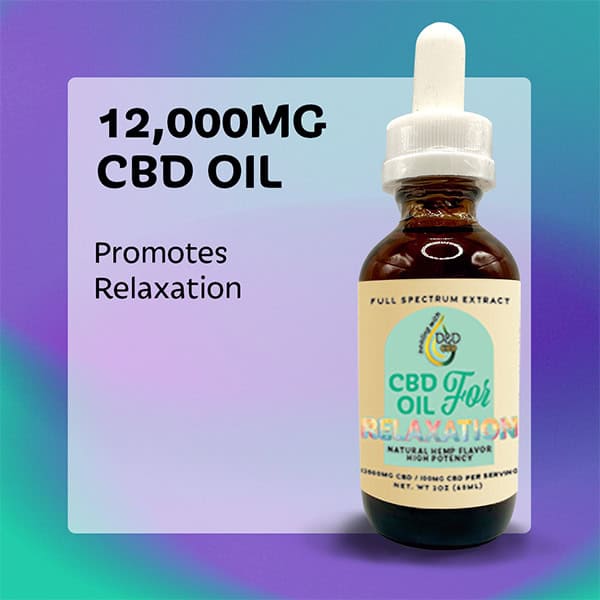
CBD oils and tinctures are taken sublingually, meaning you hold the oil under your tongue for about 60 seconds before swallowing. This allows the CBD to absorb directly into your bloodstream through the mucous membranes, bypassing the digestive system. The result is faster onset — typically 15 to 45 minutes — and a more systemic effect, meaning it works throughout your whole body rather than in one specific spot. For widespread joint pain, full-body inflammation, or arthritis that affects multiple areas, oils are often the most effective choice. They also make it easier to adjust your dose incrementally until you find what works for you.
CBD gummies and other edibles are absorbed through the digestive system, which means they take longer to kick in — usually 45 minutes to two hours — but the effects tend to last longer, often four to six hours or more. For people dealing with joint pain that disrupts sleep, or for those who want sustained relief throughout the day without re-dosing, gummies are a practical and convenient option. They’re also the easiest format for people who are new to CBD and want a consistent, pre-measured dose.
CBD topicals — salves, creams, and patches — work differently from both of the above. They don’t enter the bloodstream in meaningful amounts. Instead, they interact with cannabinoid receptors in the skin and underlying tissue right at the application site. This makes them ideal for localized joint pain: a sore knee, an aching shoulder, stiff hands. Clinical data has shown up to 30% pain reduction in hand arthritis with topical CBD, and anecdotal reports suggest onset can begin within 20 minutes of application.
Then there’s the CBD patch — a format that most people haven’t tried and that very few local providers even carry. Our Ameo Entune CBD Patch combines CBD with essential oils in a transdermal patch that delivers a slow, steady release of CBD over time. It’s not a topical in the traditional sense — it’s designed for sustained, consistent delivery rather than immediate spot treatment. Customers who’ve tried it describe it as a “gamechanger,” and more than one person has told us it’s the only product that’s worked after years of trying other options.
CBD Topical for Arthritis: What to Look for in a Product You Can Actually Trust
The CBD market is largely unregulated at the federal level, which means the gap between a good product and a worthless one can be enormous — and you often can’t tell the difference from the label alone. This is especially true for topicals, where brands can slap a high milligram number on the packaging without any verification that the CBD is actually bioavailable or present in the concentration claimed.
What actually matters when evaluating a CBD topical for arthritis is third-party lab testing with a publicly available Certificate of Analysis, a clear breakdown of CBD concentration per serving or per application, and transparency about sourcing and ingredients. The Forbes Health advisory board recommends looking for topicals with a CBD concentration of at least 3–5% by weight for meaningful pain relief. Complementary ingredients like arnica, menthol, or essential oils can enhance the effect.
At D&D CBD, Inc., we hold active licenses from the New York Office of Cannabis Management — license numbers OCM-HMPD-24-01160 and OCM-HMPR-26-13111-001 — and every product we sell comes with a COA you can pull up and read yourself. We don’t sell smokables, flower, or vape products. We built this business specifically around the health-and-wellness side of CBD, and that focus shows up in every product we carry.
Why Nassau County, NY Residents Are Turning to CBD for Joint Pain Relief
If you live in Nassau County, NY, you already know what a Long Island winter does to your joints. The cold, damp weather that settles in from November through March is one of the most consistent aggravators of arthritis and chronic joint pain — and it’s not just anecdotal. Cold temperatures cause joint fluid to thicken, muscles and tendons to tighten, and inflammatory conditions to flare. For anyone already managing knee pain, hip stiffness, or hand arthritis, the stretch from late fall to early spring can be genuinely miserable.
Add in the reality of the Nassau County commuter lifestyle — hours spent sitting on the LIRR or stuck on the Long Island Expressway — and you have a population that puts enormous repetitive stress on the lower back, hips, and knees without much opportunity for movement or relief. That kind of sustained compression and inactivity doesn’t just cause soreness. Over time, it contributes to the kind of chronic joint inflammation that becomes a daily management problem.
Long Island has also been significantly affected by the opioid epidemic — Nassau and Suffolk counties were among the hardest-hit areas in New York State. That history has made a lot of people here more cautious about conventional pain management and more motivated to find alternatives that work without carrying dependency risk. Hemp-derived CBD is federally legal, non-psychoactive, and when sourced from a licensed, lab-tested provider, it’s a genuinely viable option for people who’ve been through the pharmaceutical system and are looking for something different.
We offer free local delivery throughout Nassau County, NY, so you don’t have to drive anywhere or navigate a dispensary environment. If you have questions before you order, you can reach us directly — you’ll get a real person, not an automated response.
Common Questions Nassau County Residents Ask Before Buying CBD for Joint Pain
One of the questions we hear most often is: “Will this make me feel high?” The short answer is no. Hemp-derived CBD contains 0.3% THC or less — a trace amount that has no psychoactive effect. You won’t feel impaired, foggy, or altered. What most people describe is a gradual reduction in pain intensity and an easier time moving through their day.
Another common one: “Is CBD legal in New York?” Yes — hemp-derived CBD is federally legal under the 2018 Farm Bill and regulated in New York State by the Office of Cannabis Management. D&D CBD, Inc. holds two active OCM licenses, which means we operate within the state’s regulatory framework. For Nassau County, NY residents navigating the sometimes confusing landscape between hemp products and recreational cannabis, that distinction matters. You don’t need a medical card to purchase our products, and nothing we sell is in a legal gray area.
People also ask: “I’ve tried CBD before and it didn’t work — why would this be different?” Prior failures are almost always due to one of three things: the wrong delivery method for the type of pain, an underdose, or a low-quality product that didn’t contain what the label claimed. If you tried a topical for widespread arthritis, it wasn’t going to work the way an oil would. If you took a low-dose gummy once and felt nothing, that’s not a verdict on CBD — it’s a dosing issue. And if the product wasn’t third-party tested, there’s a real chance it simply didn’t have enough CBD in it to do anything. These are fixable problems, and we’re happy to walk you through what might work better for your specific situation.
Finally: “How much should I take?” There’s no universal answer, but the standard starting point is a low dose — typically 10 to 25mg — taken consistently for at least two weeks before adjusting. CBD works best when it builds up in your system over time rather than being used reactively. For topicals, apply directly to the affected joint two to three times per day. For oils, start with a small amount sublingually and increase gradually until you find your effective dose.
Finding the Right CBD for Your Joint Pain: Where to Start
The bottom line is this: CBD can genuinely help with joint pain — but which format you use, what’s actually in the product, and whether it comes from a source you can verify all make a significant difference in whether it works for you.
For localized pain, a topical or patch applied directly to the joint is often the most targeted approach. For widespread inflammation or pain that disrupts sleep, an oil or gummy that works systemically tends to produce better results. And for people who want sustained, slow-release relief without re-dosing throughout the day, the CBD patch is worth serious consideration.
If you’re in Nassau County, NY and ready to stop guessing, D&D CBD, Inc. is here to help you figure out what makes the most sense for your situation. We carry oils, topicals, gummies, and patches — all third-party lab tested, all compliant with New York State regulations — and we offer free local delivery so getting started is as simple as reaching out.