
If you’ve already tried melatonin and woken up feeling like you got hit by a truck, you’re not alone. A lot of people in Nassau County — commuters, parents, caregivers, people managing chronic pain — are dealing with the same cycle: can’t fall asleep, can’t stay asleep, and can’t find something that actually helps without making tomorrow harder.
The good news is that the research on plant-based sleep support has come a long way. Some herbs have decades of clinical evidence behind them. Others are newer to the conversation but showing real promise. Here’s what the science actually says — and what it means for you.
What Are Sleep Herbal Supplements and How Do They Work?
Herbal sleep supplements are plant-derived compounds that support the body’s natural ability to relax, wind down, and move into restful sleep. Unlike prescription sleep aids, most of them don’t force sedation — they work with systems your body already has, particularly the GABA pathway, which is the brain’s primary “calm down” signal, and in the case of hemp-derived compounds, the endocannabinoid system.
That distinction matters. When something works with your body rather than overriding it, you’re less likely to wake up foggy, less likely to build a tolerance, and less likely to feel dependent on it to function. That’s exactly why so many people are moving away from pharmaceutical options and looking for something more sustainable.
The FDA doesn’t regulate herbal supplements the way it regulates medications, which means quality varies enormously from one brand to the next. That’s a reason to be selective about where you buy them and what proof of quality the seller can actually show you.
Herbs to Help Sleep: What the Research Actually Supports
Valerian root is probably the most studied herb in this category. A 2024 literature review published on PubMed confirmed that valerian can effectively improve sleep quality and reduce insomnia symptoms through modulation of neurotransmitter systems — specifically, it increases GABA activity in the brain, which is the same pathway targeted by many prescription sleep medications, just more gently. Research suggests taking 300 to 600 milligrams about an hour before bed.
Chamomile is another one with actual clinical data behind it. A 2015 study involving 80 postnatal women with poor sleep quality found that those who drank chamomile tea for two weeks showed measurable improvements compared to the control group. Chamomile contains apigenin, a compound that binds to GABA receptors in the brain — the same basic mechanism as valerian, different delivery.
L-tryptophan has been studied for sleep since at least 1982, and a 2021 systematic review and meta-analysis confirmed that supplementing with at least one gram of tryptophan can aid in improving sleep onset. Your body converts tryptophan into serotonin and then melatonin — so rather than introducing a synthetic hormone, you’re giving your body the raw material to produce its own.
Glycine is newer to the conversation but worth knowing about. Research has shown that taking as little as three grams before bed can improve sleep quality and reduce daytime sleepiness in people with insomnia symptoms. It appears to work partly by lowering core body temperature, which is one of the signals your body uses to initiate sleep.
None of these are magic. But they’re not folklore either. They have mechanisms, they have studies, and they’ve been tested on real people with real sleep problems.
Where CBD and CBN Fit Into the Herbal Sleep Picture
Hemp-derived cannabinoids aren’t herbs in the traditional botanical sense, but they belong in this conversation because they work through a completely different pathway — the endocannabinoid system — that the herbs above don’t touch. That means they can complement each other rather than compete.
CBD is the more familiar of the two. It doesn’t make you high, it doesn’t contain more than 0.3% THC in compliant products, and its primary role in sleep is indirect — it reduces anxiety and physical tension, which removes two of the most common barriers to falling asleep. For people whose main issue is a racing mind or a body that won’t let go of the day, CBD addresses the root cause rather than trying to sedate around it.
CBN is the one that’s getting more attention lately, and for good reason. Research from the University of Sydney found that CBN increases both REM and non-REM sleep, with effects comparable to some prescription sleep aids — without the dependency risk or the morning grogginess. If your problem is waking up at 3am and lying there for two hours, CBN is the cannabinoid worth knowing about.
Because the FDA doesn’t regulate these products the same way it does medications, the label on a CBD or CBN product is only as trustworthy as the company behind it. Third-party lab testing with publicly available Certificates of Analysis is the only real way to verify that what’s on the label is actually in the bottle. If a brand can’t show you that documentation, that’s your answer.
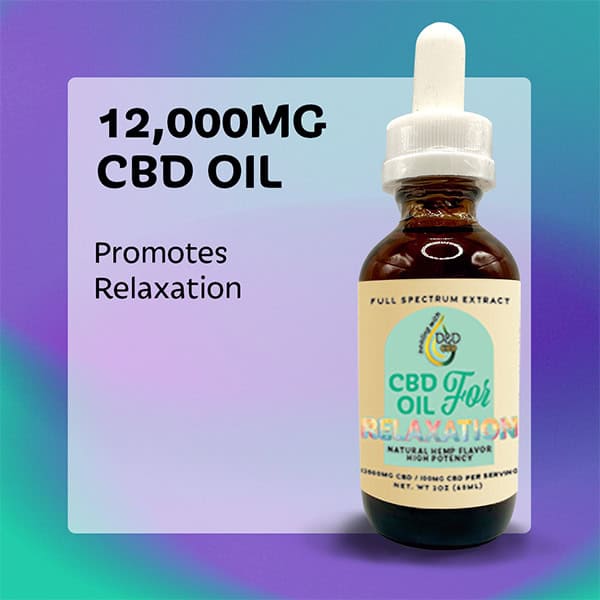
At D&D CBD, Inc., every product we carry is third-party lab tested, and our Certificates of Analysis are publicly available on our website. We also hold active hemp merchant and processor licenses from the New York State Office of Cannabis Management — license numbers OCM-HMPD-24-01160 and OCM-HMPR-26-13111-001 — which means we’re operating under a verified regulatory framework, not just making claims on a website.
Why Nassau County Residents Face Unique Sleep Challenges
Nassau County is one of the most densely populated suburban counties in the country, and a significant portion of its residents are commuting into New York City every day. A 45-to-75-minute LIRR ride each way, the mental residue of a full day in the city, and the compressed personal time that comes with suburban family life — that combination creates a specific kind of chronic sleep pressure that generic wellness content simply doesn’t address.
Add to that the seasonal factors — Long Island’s humid summers disrupt sleep, the fall time change hits hard, and the short days of winter affect circadian rhythms in ways that compound whatever stress is already present — and you have a population with real, ongoing sleep challenges that deserve real, substantive answers.
That’s part of why we built D&D CBD, Inc. the way we did. We’re not a dispensary, we’re not a gas station supplement rack, and we’re not a faceless e-commerce brand. We’re a family-owned business with a physical location in East Northport, and we offer free local delivery to Nassau County upon request. When you reach out, you’re talking to a real person.
Wellness-Focused Hemp Products vs. Recreational Cannabis
With New York’s cannabis legalization, Nassau County, NY residents now have access to recreational dispensaries offering sleep products that include THC. That’s a legitimate option for some people. But it’s not what everyone is looking for, and it’s worth being clear about the difference.
If you want to sleep better without feeling intoxicated, without the recreational dispensary experience, and without products that vary in their THC content in ways that can affect how you feel the next morning, then a wellness-focused hemp product is a fundamentally different category. Our entire product line — oils, gummies, patches, salves, and pet products — sits on the non-intoxicating side of that line. No smokables, no flower, no THC-dominant formulations. Just hemp-derived compounds in formats designed for daily wellness use.
That distinction matters especially for people who are managing a health condition, taking other medications, or simply want to be sharp and functional the next day. CBD and CBN at compliant hemp levels work with your body’s existing systems. They don’t override them.
We also serve pets. If you have a dog that’s anxious at night or struggling with age-related discomfort, our hemp pet oils and treats are formulated specifically for them. It’s a part of the business we’re proud of, and it’s something you won’t find addressed in most sleep supplement content.
How to Choose a Quality Herbal Sleep Supplement
The supplement market is enormous and largely unregulated. The burden of proof falls on the brand, and the burden of verification falls on you.
Third-party lab testing is non-negotiable. Any reputable brand should be able to show you a Certificate of Analysis from an independent laboratory — not just a claim on the label, but a document that verifies the cannabinoid content, confirms the absence of heavy metals and contaminants, and matches the specific batch you’re buying. If that documentation isn’t publicly available, move on.
State licensing matters in New York specifically. The Office of Cannabis Management has a clear framework for hemp merchants and processors, and licensed operators are held to standards that unlicensed sellers simply aren’t. It’s a meaningful signal that a brand is operating transparently and within a regulatory structure.
Look for brands that are specific about their formulations. “CBD for sleep” is not a product description — it’s a marketing phrase. What cannabinoids are in it, at what concentration, and in what form? A sublingual tincture hits differently than a gummy, which hits differently than a transdermal patch. The Ameo Entune CBD Patch we carry, for example, delivers cannabinoids over 24 hours through the skin — a completely different experience from a gummy you take before bed.
Finally, pay attention to who’s behind the brand. A business with named owners, personal responses to every customer review, earned press coverage, and active community involvement is a different kind of operation than an anonymous e-commerce storefront. That accountability doesn’t guarantee a product works — but it does mean someone’s reputation is on the line if it doesn’t.
Finding the Right Herbal Sleep Aid Starts With the Right Information
The herbs and hemp-derived compounds with real evidence behind them — valerian, chamomile, CBN, CBD, glycine, L-tryptophan — all work differently, and none of them are one-size-fits-all. What they have in common is that they work with your body’s existing systems rather than forcing an outcome. For most people, that’s exactly what makes them sustainable over the long term.
If you’re in Nassau County, NY and you’ve been cycling through options that haven’t delivered, the answer isn’t necessarily a different product — it might be a better-quality version of something you’ve already considered, or a cannabinoid you haven’t tried yet.
We at D&D CBD, Inc. carry third-party tested, New York State licensed hemp wellness products, and we offer free local delivery to Nassau County. If you have questions about what might work for your specific situation, reach out — you’ll get a real answer from a real person.