
Most people searching for herbal remedies for insomnia have already been through the standard playbook. You tried melatonin. Maybe it helped for a week. You’ve heard about valerian but weren’t sure if it actually does anything. You’ve probably wondered whether CBD is just marketing or whether there’s something real behind it.
You’re not looking for a wellness lecture. You want to know what works, how it works, and whether it’s worth trying. That’s exactly what this covers—the herbs with real clinical backing, the cannabinoids that sleep researchers are now taking seriously, and how to think about all of it if you live in Nassau County and your nights have been rough for longer than you’d like to admit.
Best Herbs for Insomnia: What the Research Actually Shows
The honest answer is that not all sleep herbs work the same way, and not all insomnia is the same problem. Some people can’t fall asleep. Others fall asleep fine but wake at 3 AM with their brain already running. Others sleep through the night but wake up feeling like they never rested at all.
The herb that helps one person may do nothing for another—not because herbal remedies don’t work, but because the match matters. What the research does confirm is that several herbs have measurable effects on the brain chemistry behind sleep. These aren’t folk remedies that survived purely on tradition. They survived because they work on real neurological pathways—and modern research has started to explain exactly how.
Valerian, Passionflower, and the GABA Connection
Valerian root has been used as a sleep and anxiety remedy since ancient Greece—and it turns out the Greeks were onto something. Valerian works primarily by promoting GABA levels in the brain. GABA is an inhibitory neurotransmitter that essentially tells your nervous system to slow down.
It’s the same pathway targeted by prescription sleep medications like benzodiazepines and Z-drugs, which is part of why valerian has such a long track record for anxiety-driven insomnia. The difference is that valerian does this without the dependency risk that makes prescription options so complicated for long-term use.
Passionflower works along similar lines. A double-blind randomized clinical trial found passionflower extract was as effective as oxazepam—a common anti-anxiety medication—at treating anxiety, and caused fewer issues with job performance impairment. For people whose insomnia is rooted in a mind that won’t stop running, passionflower is worth understanding.
It has a sedative effect on the central nervous system and is particularly useful for the kind of sleeplessness that comes from stress you can’t put down. Chamomile, lemon balm, and hops round out the classical herbal toolkit. Chamomile and lemon balm are gentler options that work well for mild anxiety and sleep onset difficulty.
Hops are interesting because they work significantly better when combined with valerian—studies show the combination promotes the alpha waves present in the early stages of sleep, which is the transition point where many people get stuck. None of these are sedatives in the pharmaceutical sense. They don’t knock you out. What they do is lower the neurological activation that keeps you alert when you’re trying to wind down—which, for most people with anxiety-driven insomnia, is exactly the mechanism that’s failing.
Ashwagandha, Magnesium, and Sleep That Actually Restores
Not all insomnia is about falling asleep. A significant portion of people who struggle with sleep quality aren’t lying awake at bedtime—they’re sleeping light, waking frequently, or waking up exhausted despite a full eight hours. That’s a different problem, and it calls for different tools.
Ashwagandha is an adaptogen from Ayurvedic medicine with a growing body of clinical evidence behind it. It works primarily by reducing cortisol—the stress hormone that, when chronically elevated, disrupts the natural sleep cycle and keeps your body in a low-grade alert state even during sleep. It’s also associated with improved mental clarity and more settled dreaming, which matters more than people realize.
When cortisol stays high overnight, sleep becomes lighter and less restorative. Ashwagandha addresses that at the root rather than just masking the symptom. Magnesium is worth mentioning here because it’s often overlooked and genuinely useful. Studies show that low magnesium levels are directly linked to disturbed sleep and insomnia.
Magnesium helps regulate melatonin production and has a muscle-relaxing effect that supports the physical side of winding down. It’s not a standalone solution for serious insomnia, but for people whose sleep is disrupted by physical tension or restlessness, it’s a meaningful piece of the picture. The common thread across ashwagandha, magnesium, and the GABA-supporting herbs is that they all work on the underlying physiological conditions that make sleep hard—not just the surface symptom of lying awake.
That’s the distinction worth keeping in mind when you’re comparing options. A remedy that helps you fall asleep faster is not the same as one that helps your body actually recover overnight.
Natural Remedies for Nightmares in Adults
Nightmares don’t get talked about much in the context of insomnia, but for a meaningful number of adults they’re a significant part of the problem. It’s not just the nightmare itself—it’s the dread that builds before bed, the disrupted REM sleep, and the way a bad night feeds into the next one.
The cycle is self-reinforcing: nightmares lead to anxiety about sleep, which leads to worse sleep, which leads to more nightmares. The good news is that the herbs that address anxiety-driven insomnia also tend to address nightmare frequency and intensity. They’re solving the same underlying problem from the same direction.
Natural Remedy for Nightmares: Which Herbs Help Most
Passionflower’s anxiety-reducing properties make it one of the more useful herbs for nightmare reduction specifically. When the nervous system is less activated going into sleep, REM sleep tends to be less turbulent. Chamomile and elderflower taken as a tea or tincture about an hour before bed are traditional remedies for this exact purpose—calming the system enough that the transition into deep sleep is smoother and less prone to disruption.
Skullcap and hops are less commonly discussed but worth knowing about. Skullcap has a deeply relaxing effect on the nervous system and is used specifically for sleep that’s restless or disturbed. Hops, as mentioned earlier, work well in combination—particularly with valerian—and contribute to the kind of sleep quality that makes nightmares less frequent.
Ashwagandha comes up again here for a specific reason: it’s associated with less intense dreaming and more settled sleep overall. For people who experience vivid, stressful dreams tied to high-stress periods in their lives, ashwagandha’s cortisol-lowering effect tends to quiet that pattern over time. It’s not an immediate fix—adaptogens generally build over weeks rather than hitting overnight—but for chronic nightmare sufferers, the cumulative effect is meaningful.
The underlying principle is straightforward. Nightmares are more common and more intense when the nervous system is dysregulated. The herbs that calm that dysregulation during waking hours tend to carry that effect into sleep. You’re not treating the nightmare directly—you’re treating the anxiety state that generates it.
CBN for Sleep: What Makes It Different from CBD
CBN—cannabinol—is the cannabinoid that sleep researchers have been paying close attention to, and for good reason. A 2023 double-blind, randomized, placebo-controlled clinical trial of 321 participants found that 20mg of CBN significantly reduced nighttime awakenings and overall sleep disturbance compared to placebo, without impacting daytime functioning. That’s a specific, clinically meaningful result for the specific problem of sleep maintenance—waking in the middle of the night and struggling to get back down.
Research published in November 2024 from the University of Sydney’s Lambert Initiative confirmed that CBN is the first cannabis constituent objectively shown to increase both REM and non-REM sleep. That matters because deep sleep and REM sleep are the stages where your body and brain actually recover. More of both means you wake up feeling like you actually slept.
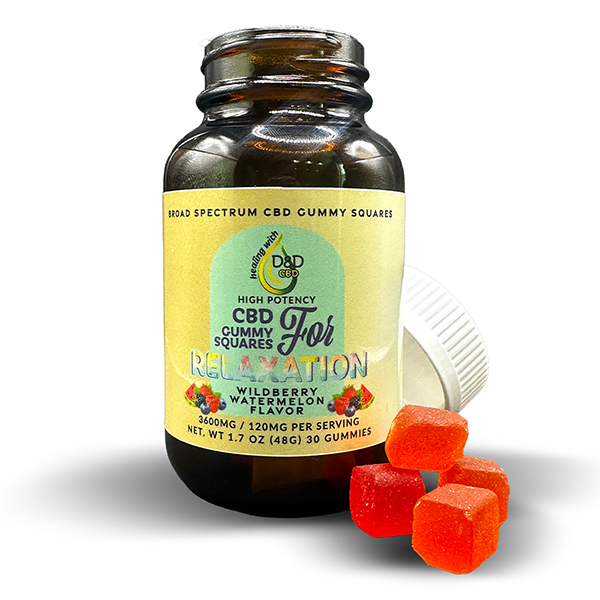
CBN is not the same as CBD, and it’s worth understanding the difference. CBD has broad calming and anti-inflammatory properties that support sleep indirectly—by reducing the anxiety or physical discomfort that makes sleep harder. CBN targets sleep more directly, acting on the same receptor system as THC but at roughly one-tenth the potency, which means it’s non-intoxicating. You won’t feel high. You’ll sleep.
For Nassau County residents who have tried CBD for sleep with mixed results, CBN is often the missing piece. The two cannabinoids work differently and, for many people, work better together than either does alone. If you’ve been waking at 3 AM regardless of what you’ve tried, CBN is the tool most directly supported by current clinical evidence for that specific problem.
At D&D CBD, Inc., all of our products are third-party lab tested with publicly available Certificates of Analysis. We hold active OCM licenses in New York State—OCM-HMPD-24-01160 and OCM-HMPR-26-13111-001—and we sell exclusively on the healthy side of hemp: no smokables, no flower, no THC intoxication. What you see is what you get, and every product we carry has the lab documentation to prove it.
Natural Ways to Help Insomnia: Where to Start
If there’s one thing worth taking from all of this, it’s that insomnia is not a single problem with a single solution. The herb or cannabinoid that helps you depends on what’s actually driving your sleep disruption—anxiety, cortisol, nighttime awakenings, poor sleep quality, or some combination of all of them. Starting with that distinction puts you ahead of most people who just grab whatever’s on the shelf.
Nassau County runs at a pace that doesn’t make sleep easy. Long commutes, demanding work schedules, and the constant background noise of life close to the city all contribute to the kind of chronic low-grade stress that wrecks sleep over time. That’s the reality for a lot of people here, and it’s worth naming plainly.
If you want to talk through what might actually work for your situation—not a chatbot, not a generic FAQ, but a real conversation—reach out to us at D&D CBD, Inc. We’re a family-owned business operating out of East Northport, NY, and we offer free local delivery to Nassau County customers. We’re happy to help you figure out where to start.