
If you’ve been using CBD for a while and wondering whether CBG is worth adding — or if you’ve just started hearing the term and want to know what it actually does — you’re in the right place. These two cannabinoids come from the same plant, but they work differently, suit different goals, and aren’t interchangeable. The good news is you don’t have to choose blindly. Once you understand what each one does and how they interact with your body, the decision gets a lot clearer. Let’s start with the one that most people have never fully heard explained.
What Is CBG (Cannabigerol)?
CBG stands for cannabigerol, and it holds a unique position in the hemp plant’s chemistry. Before the plant produces CBD, THC, or any other cannabinoid, it first produces CBGA — cannabigerolic acid — the raw compound from which all of those cannabinoids are eventually synthesized. CBG is what’s left after that acidic form is processed. That’s why it’s often called the “mother cannabinoid.”
Here’s the catch: by the time a hemp plant reaches full maturity, most of its CBGA has already converted into other cannabinoids. That leaves very little CBG behind — typically less than 1% of the plant’s total biomass. Extracting it in meaningful quantities requires harvesting young plants early, which means lower yields and higher production costs. When you see a CBG product priced higher than a comparable CBD product, that’s the real reason why.
How the CBG Cannabinoid Interacts With Your Body
To understand what makes CBG different from CBD, it helps to know a little about the endocannabinoid system — the network of receptors in your body that cannabinoids interact with. The two main receptors are CB1, found primarily in the brain and nervous system, and CB2, found mostly in the immune system and peripheral tissues.
CBG binds directly to both CB1 and CB2 receptors. That direct binding is what gives CBG its more immediate, targeted quality. People who use CBG often describe it as something they notice — a sharpness in the morning, a reduction in acute discomfort, a sense of focus without the edge that caffeine can bring. One user put it simply: “No jitters. No crash.” That’s not a coincidence. CBG’s direct receptor activity means it’s doing something measurable at the receptor level rather than working indirectly through the system.
CBD, by contrast, doesn’t bind directly to CB1 or CB2. It works by influencing the endocannabinoid system more broadly — slowing the breakdown of your body’s own naturally produced cannabinoids and modulating receptor activity from a distance. This produces a different kind of effect: more gradual, more diffuse, better suited to sustained baseline support for things like sleep, anxiety, and general stress management.
The practical shorthand that’s emerged from the research is this: CBG tends to suit daytime use — focus, energy, acute inflammation, and stress in the moment. CBD tends to suit winding down — sleep, ongoing anxiety, and longer-term wellness support. Neither is better in an absolute sense. They’re just built for different jobs.
In July 2024, Washington State University researchers published the first human clinical trial on CBG in the peer-reviewed journal *Scientific Reports*. A 20mg dose of hemp-derived CBG significantly reduced anxiety and stress at 20, 45, and 60 minutes after ingestion compared to placebo. Crucially, no intoxication was reported. CBG does not get you high. That’s worth saying plainly, because it’s one of the most common misconceptions about any cannabinoid that comes from the cannabis plant family.
What Does CBG Actually Help With?
The 2024 WSU trial confirmed what earlier pre-clinical research had been pointing toward for years: CBG has a meaningful effect on anxiety and stress. But the evidence base extends beyond that. Animal model studies have found that CBG may reduce inflammation associated with inflammatory bowel disease, exhibit neuroprotective properties in conditions involving oxidative stress, and demonstrate antioxidant activity. Research has also explored CBG’s potential role in reducing intraocular pressure — relevant for people managing eye health — and its possible appetite-stimulating effects, which could matter for people dealing with illness-related appetite loss.
It’s worth being honest about where the science stands. Most of the pre-clinical evidence comes from animal studies, and human clinical research on CBG is still in its early stages. The 2024 WSU trial is the landmark study — the first of its kind — and more will follow. But the foundation is real, and it’s growing.
What the existing evidence does support clearly is that CBG is not a marketing trend. It has a distinct mechanism of action, a documented effect on anxiety in a controlled human trial, and a growing body of pre-clinical data suggesting broader applications. For someone who has been using CBD and feels like it’s not quite addressing a specific problem — daytime focus, acute joint discomfort, stress that hits fast and hard — CBG is a reasonable next step to explore, not a gamble.
One thing worth noting for anyone concerned about workplace drug testing: CBG itself is not THC, and it is not psychoactive. Hemp-derived CBG products that comply with federal law contain 0.3% THC or less. If you have specific concerns about drug testing, look for products with a Certificate of Analysis from an independent lab — that document will tell you exactly what’s in what you’re taking.
CBG Oil Benefits vs. CBD: Matching the Right Cannabinoid to Your Goal
Comparing CBG oil benefits to CBD’s isn’t really about which one wins. It’s about which one fits what you’re trying to accomplish. CBD has a larger and more established body of research behind it — the FDA has even approved a prescription CBD drug, Epidiolex, for specific seizure conditions — and it’s well-supported for anxiety, sleep, and general stress management. CBG is newer to human research but brings a distinct profile that CBD doesn’t replicate.
The more useful question isn’t “which is better?” It’s “what are you dealing with, and when?” If you’re managing chronic stress and struggling to sleep, CBD’s broad, gradual modulation of the endocannabinoid system is likely the better fit. If you’re dealing with acute inflammation, need mental clarity during the day, or want something that works more immediately on anxiety, CBG’s direct receptor binding gives it an edge for those specific goals.
Can You Take CBG and CBD Together?
Yes — and there’s a good argument that combining them is more effective than using either one alone. The concept behind this is called the entourage effect: the idea that cannabinoids work better in combination than in isolation, each one amplifying or complementing the other’s activity. It’s supported by the broader cannabinoid research literature, and it’s the principle behind full-spectrum hemp products that contain multiple cannabinoids rather than a single isolated compound.
Think about what each cannabinoid brings to the combination. CBG’s direct binding to CB1 and CB2 receptors provides immediate, targeted activity. CBD’s indirect modulation of the endocannabinoid system provides sustained, systemic support. Together, they cover more ground than either one does on its own. Add CBN — another cannabinoid with its own distinct properties, particularly around sleep — and you have a formulation that addresses multiple dimensions of wellness simultaneously.
This is why multi-cannabinoid tinctures exist, and why they’ve become increasingly popular among people who have already tried single-cannabinoid CBD products and want more. It’s not that CBD stopped working. It’s that there’s more of the plant available to work with, and using more of it tends to produce better results.
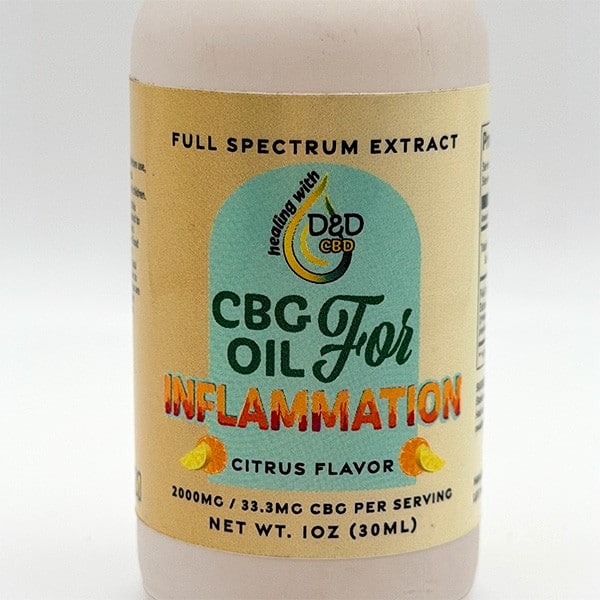
At D&D CBD, Inc., our tinctures are formulated with CBD, CBG, and CBN together — not because it’s a trend, but because the combination reflects what the evidence actually supports. Every batch is third-party lab tested, and our Certificates of Analysis are publicly available so you can verify the cannabinoid content before you buy, not after. We hold dual licensing from New York’s Office of Cannabis Management — license numbers OCM-HMPD-24-01160 and OCM-HMPR-26-13111-001 — which means we operate under both the Hemp Processor/Distributor and Hemp Retailer regulatory frameworks.
What Nassau County Residents Should Know Before Choosing a CBG or CBD Product
If you live in Nassau County, NY — whether you’re commuting into the city on the LIRR, managing a household in Garden City or Massapequa, or dealing with the kind of low-grade, persistent stress that comes with this pace of life — you’re probably already familiar with what these cannabinoids are designed to help with. Stress, disrupted sleep, joint discomfort, and anxiety aren’t abstract wellness concerns here. They’re Tuesday.
Nassau County’s population skews health-conscious. The county’s cigarette smoking rate sits at 7.2%, well below New York State’s 12.8% average — a meaningful signal that this is a community that takes its health seriously and tends to look for alternatives that don’t involve inhalation or heavy pharmaceutical intervention. That orientation fits exactly what CBG and CBD, used properly, are designed to offer.
What it doesn’t mean is that every product on the shelf is worth buying. New York State requires any business selling cannabinoid hemp products to hold a license from the Office of Cannabis Management. That requirement exists for a reason: it ensures that products meet labeling, testing, and safety standards that protect consumers. Not every seller operating in or around Nassau County holds that license. Some sell CBG vape cartridges and smokable flower alongside their wellness products, which makes it harder to know what you’re actually getting or what standard the product was held to.
We don’t sell smokables. We never have. Our product line — oils, tinctures, topicals, patches, gummies, and pet products — is built around the wellness side of cannabinoids, not the cannabis lifestyle side. That’s a deliberate choice, and it shapes everything about how we formulate, test, and stand behind what we sell. We offer free local delivery to Nassau County residents, and if you want to talk through which cannabinoid or formulation makes sense for your specific situation, you can schedule a consultation directly with the people who run this business — not a customer service rep, not a chatbot. The actual owners.
The breast cancer survivor and the caregiver of a child with CHARGE syndrome who trust us with their wellness aren’t looking for trendy products. They’re looking for something they can count on, from people they can reach. That’s the standard we hold ourselves to, and it’s the same standard we’d encourage you to apply to any cannabinoid product you consider.
CBG vs. CBD: The Bottom Line for Smarter Cannabinoid Use
CBG and CBD are not competing products. They’re complementary cannabinoids with different mechanisms, different strengths, and different ideal use cases. CBD is well-researched, broadly effective for anxiety and sleep, and works gradually through the endocannabinoid system. CBG is rarer, more targeted, directly active at CB1 and CB2 receptors, and — as the first human clinical trial confirmed in 2024 — measurably effective for stress and anxiety without any intoxicating effect.
For most people, the best answer isn’t one or the other. It’s understanding what each one does well, and finding a formulation that uses both intelligently. If you’re not sure where to start, or if you’ve been using CBD and feel like something’s missing, that’s worth a real conversation — not a generic quiz on a product page.
D&D CBD, Inc. is based in East Northport and serves Nassau County, NY and the surrounding Long Island area with free local delivery, nationwide shipping, and in-person consultations by appointment. Reach out and talk to someone who actually knows the products, knows the science, and will give you a straight answer.